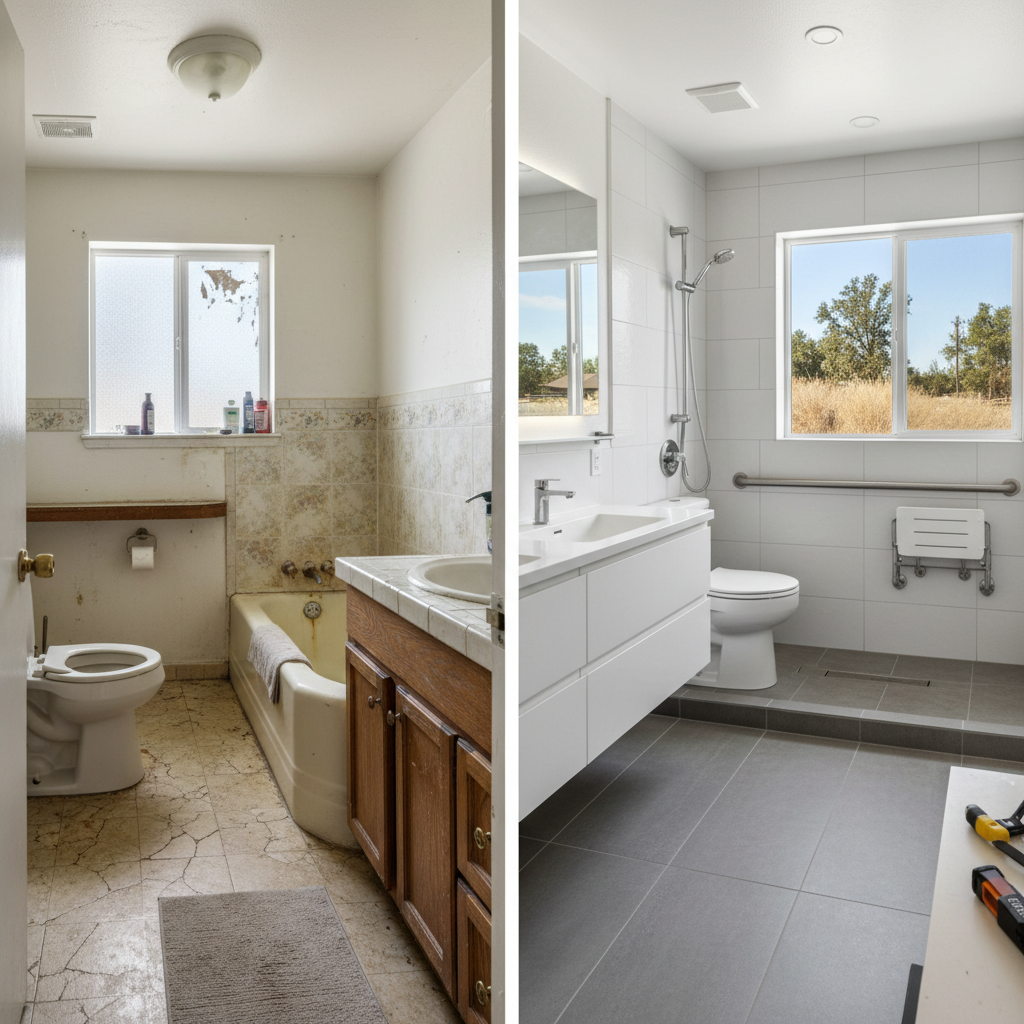
Alright, let's talk accessible bathrooms. If you're a homeowner here in Roseville, you're probably thinking about your options. Maybe you're planning for aging parents, or a family member with mobility challenges, or just looking ahead for yourself. There are two main paths to take: you can try to retrofit your current bathroom, or you can build accessibility right into a full remodel. I've seen both approaches, and they each have their good and bad points. Let's dive in.
Retrofitting Your Existing Bathroom: The Quick Fix
When I say "retrofitting," I mean making changes to a bathroom that's already there without ripping everything out down to the studs. It's like adding accessible features to what you've got. This usually involves things like:
- Putting in grab bars near the toilet and in the shower.
- Swapping out your old toilet for a comfort-height one.
- Maybe getting a new showerhead that's handheld and adjustable.
- Laying down non-slip mats or tiles.
- And sometimes, adding a shower seat.
Cost:
Generally, retrofitting is the cheaper way to go upfront. You're not moving walls, rerouting plumbing, or changing the room's size. You're just buying and installing specific items. A basic walk-in shower conversion, for instance, might cost you $3,000 to $4,500, but that's often for a curbed shower, not one that's completely flat. Grab bars? They're usually a few hundred bucks each, installed. It definitely won't hit your bank account as hard right away.
Durability & Maintenance:
How long retrofitted items last really depends on the quality of the products and how well they're put in. Grab bars, for example, need to be anchored into wall studs or blocking — not just drywall — to be truly safe and strong. Non-slip mats are fine, but they're not a permanent fix, and you'll need to clean them regularly. If you're just adding a temporary ramp or a shower chair, those will wear out faster than something built-in. Maintenance is pretty standard, but you might find yourself replacing those temporary solutions more often than you'd like.
Appearance:
This is where retrofits often fall short. Sure, there are some really nice-looking grab bars out there now that don't scream 'hospital bathroom,' but it's tough to make a bunch of add-ons look truly seamless and integrated. You're stuck with the existing layout and finishes, so you might end up with a space that works but isn't exactly stylish. It can often look like an afterthought, which isn't great for resale or just for enjoying your own home, is it?
Building Accessibility In: The Full Remodel Approach
This is where Valley Bathroom & Kitchen really shines. Building accessibility in means we design the bathroom from scratch, keeping universal design principles in mind. We're talking about things like:
- Zero-threshold or roll-in showers that are flush with the floor, getting rid of any trip hazards. This often means structural adjustments under the floor, especially in older Roseville homes where the subfloor might not be perfectly level or the joists need modifying for proper drainage slope.
- Wider doorways, usually 32-36 inches, and enough clear floor space for a wheelchair to turn around (a 60-inch diameter is the gold standard, by the way).
- Reinforced walls behind the drywall, so you can easily add grab bars later, even if you don't put them in right away.
- Vanities you can roll under, with knee clearance.
- Lever-handle faucets and other fixtures that are easy to use.
- Slip-resistant flooring throughout the whole bathroom.
Cost:
This approach is a bigger investment upfront. An accessible remodel can cost 15% to 35% more than a standard one. Just a roll-in shower alone can run from $4,500 to $12,000+, depending on how much work is involved and the materials you choose. You're paying for structural changes, new plumbing layouts, and specialized installation. But here's the kicker: if you try to add these features later to a non-accessible remodel, it can cost two or three times more because you're tearing out new work.
Durability & Maintenance:
When accessibility is built in, it's made to last. The structural changes, like a properly sloped shower pan for a zero-threshold entry, are permanent. We pick materials for their longevity and how easy they are to clean, often with fewer grout lines or slip-resistant tiles that are part of the design. Maintenance is generally simpler because everything is purpose-built and seamless. You won't have to worry about replacing temporary items or dealing with wear and tear on things that were just added on.
Appearance:
This is where built-in accessibility really shines. When it's done right, an accessible bathroom doesn't look